
Key Highlights & Rituals
- Girivalam: Devotees circumambulate the hill path of the temple (often early in the morning or evening), turning the entire hill-temple into an act of pilgrimage and penance.
- Special Abhishekams & Poojas: On the festival days, elaborate abhishekam (ritual bathing) of the deity, alankarams (decorations), dhvajavarohanam (flag hoisting) and deepa aradhana (lamp worship) are held.
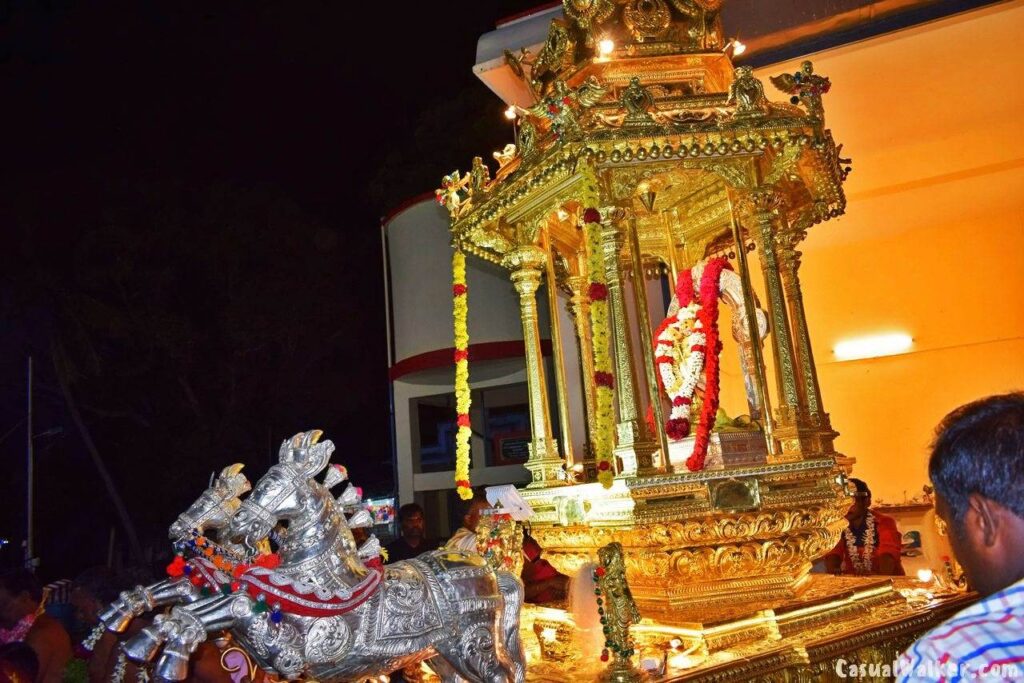
- Processions & Vahanas: The deity mounted on various vahanas (vehicle mounts) is taken in procession around the temple and adjoining precincts—creating a large festive atmosphere.
- Devotional Practices: Devotees often carry kavadi (in some Murugan temples), carry milk pots, perform “angapradakshinam” (rolling or full-body circumambulation), take holy dips in temple springs/water-ponds (e.g., Ashta Padma Kulam) — especially as part of fulfilling vows.
- Cultural Programs: Alongside religious rituals, the festival may include local music, folk dance, peacock dances (Mayilattam), vocal/ instrumental performances, and special offerings by devotees from nearby villages.
- Scenic & Spiritual Experience: Since the temple is hill-based, the climb, the views, misty surroundings and cool breeze add to the spiritual ambience. Many pilgrims treat the visit as a combination of devotion + nature retreat.
Significance & Meaning
- The festival emphasises Lord Murugan’s victory over evil (commonly celebrated in Skanda Sashti, but here also connected) and the granting of spiritual strength, wisdom, youthfulness and victory.
- At a hill temple, the act of climbing, offering, and participating in rituals is seen as symbolic of rising above worldly attachments and attaining higher spiritual level.
- For many devotees, Vaikasi Visakam at Thirumalai Kovil is a time to make vows, seek blessings, and renew faith. The natural setting reinforces the connection between divinity and nature.